


We 💛 data. And we particularly love data that makes the world more accessible.
But data by itself is only half the story. The consistency, structure and format of data collection is what makes real change possible.
That’s why we have been developing an Active Travel Data Specification (ATDS) focused around the needs of disabled people. The project will establish an open source framework and standards for active travel data. Harmonising this data will support the creation of clearer routes and safer, more independent travel for those who currently face barriers due to unreliable accessibility information.
The Scaling Innovation programme
We are really happy we can now announce this project and the fact that we have been selected for funding and support from Catapult CP as part of its Scaling Innovation programme with the National Centre for Accessible Transport (ncat).
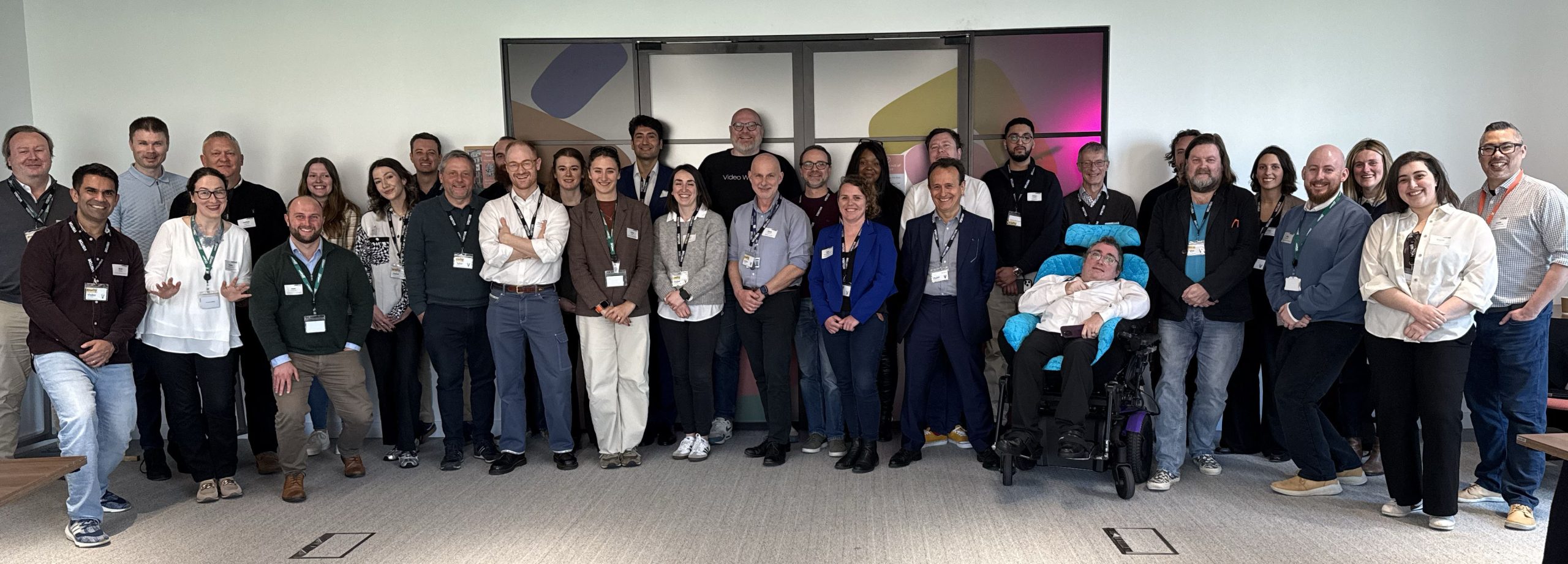
Scaling Innovation is aimed at improving accessibility within transport. ATDS will be developed in collaboration with disability organisations and policy partners. We will be working with ncat and RiDC to understand the needs of disabled people and the barriers they face. This will enable the development of the specification and a method for consolidating fragmented datasets across local authorities.
Why is an Active Travel Data Specification needed?
Currently, there is no universal standard for collecting or sharing data for walking, wheeling and cycling routes. Hundreds of organisations create and use active travel data – each in their own way. Hundreds more who could benefit have no access to data. The ATDS will be open source and will allow for easy coordination between public bodies, commercial companies and third sector organisations.
There are a number of benefits:
- Creating a specification for consistent, accurate information about environmental elements on a route, such as path width, gradients, surface quality, kerbs, lighting and rest facilities will help travellers who need to prepare in advance for journeys.
- Local authorities can use this information to improve pathways and remove barriers to access.
- Mapping platforms can use data to provide greater detail about routes, helping people build their confidence making journeys by walking, wheeling or using mobility aids.
- Tens of thousands of new homes are being built across Britain. Planners will be able to use the ATDS to connect new developments with existing active travel networks, creating healthier, more equitable communities.
We look forward to sharing updates with you as the project progresses. You can find out more about the Scaling Innovation programme in the press release here.


